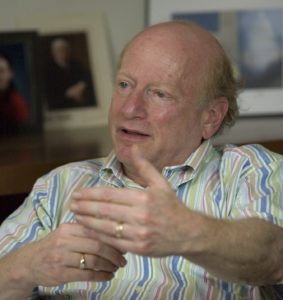
Feb 14, 2014 Paul Horwitz
James D. Nelson, Conscience, Incorporated, Mich. St. L. Rev. (forthcoming), available at SSRN.
Perhaps the single hottest issue in American law and religion right now is the dispute over the so-called “contraceptive mandate.” The Affordable Care Act requires employers to extend insurance coverage to include contraceptive care. It includes some exemptions for particular churches and other religious organizations, but the Obama administration has refused to extend that exemption too widely. A number of businesses or business owners have complained that this mandate violates “their” religious consciences and that, under the Religion Clauses of the First Amendment and/or the Religious Freedom Restoration Act, an exemption is required. Key questions raised by the controversy include whether corporations have religious rights at all, whether the mandate constitutes a substantial burden, and whether the mandate is generally applicable or not. Lower court rulings are all over the map. The Supreme Court will hear two of those cases next month.
Articles on the contraceptive mandate are a growth industry right now but, with all due respect, few of them have said anything all that deep. Much of the work on this issue is still at the shadow-amicus-brief stage of legal doctrinalism, in which the first articles addressing a legal issue read like standard legal briefs lining up on one side of the issue or the other. There is some value in that for the litigants, and for those scholars who are rehearsing for amicus participation. But those articles really are just rehearsals, efforts to fight tomorrow’s battles with yesterday’s tools.
James Nelson’s draft article Conscience, Incorporated is a welcome exception. Many articles exhaust themselves on a threshold question: can corporations assert Free Exercise rights at all? Authors conclude that they obviously do or obviously don’t. But most interesting legal work, whether doctrinal or theoretical, takes place at the “it depends” level. That’s the ground that Nelson’s fine article occupies.
As Nelson writes, “The problem is that courts do not have a workable theory to guide their analysis.” The courts lack a fully coherent account of corporate identity itself, as it relates to constitutional rights and particularly matters like individual conscience. Speech, at least, is an activity in the world that directly implicates the recipients of that speech; whether the “person” pronouncing on matters of public concern is a soap-box speaker or a publicly traded newspaper, it matters to all citizens that that speech on matters of public concern take place. Consciences are harder to pin down. In Nelson’s view, standard debates over the nature of corporate personhood, which rely on “abstract descriptions of the corporate form,” all “fail to illuminate our inquiry into rights of corporate conscience.” They “provide only a sort of window dressing for unstated normative premises.”
Instead, Nelson argues, we must “develop a theory of corporate conscience that takes account of the nature of the relationships between individuals and organizations.” He calls this “the social theory of conscience.” If “conscience is about the construction of our identity and personhood,” then “we must be attentive to the ways in which our various social associations contribute to that process.” We might begin by distinguishing between organizations in which individuals “use their collective affiliation as a tool to achieve instrumental ends,” and have little interest in or commitment to deeper identity formation, and “constitutive communities” in which “individuals view their affiliation with the collective as a core aspect of their own identity.” It is the latter sorts of institutions, Nelson argues, those that involve a “shared [interest] among the members of a group or institution,” that have the strongest claim to some form of corporate conscience.
For Nelson, the general state of “environmental conditions in modern corporate life” is largely inconsistent with the social theory of conscience. Those conditions encourage all the constituents of a corporation to remain detached from their roles in an organization, weakening any claim to a collective or corporate conscience. But he acknowledges that other kinds of entities—with churches on one end, and parachurch organizations (such as religious schools or social service agencies) and some closely held companies in the middle—have a stronger claim to being constitutive communities sharing a commitment to particular conscience-driven values, and thus are in a stronger position to assert claims of conscience.
Nelson’s goal is not to answer the question how to treat corporate Free Exercise claims once and for all, or how to resolve individual claims concerning the contraceptive mandate. “When all is said and done,” he writes, “the legacy of the contraceptive mandate may be that it exposed the need to think more seriously about the broader phenomenon of institutional exemption.”
As Nelson acknowledges, one might favor a presumptive rule in favor of corporate conscience claims (or against them) as the best means of implementing a social theory of conscience, given the institutional capacities of courts. Or one might conclude, drawing on ancient history or recent cases, that conscience, in a more or less personal sense, is not the only basis for a viable Free Exercise claim—that there are structural reasons to favor a protective stance toward religious claims by institutions, even if not all their stakeholders share the same value commitments. Even if we agree with the social and identity-forming focus, we might hold a different view of the relevant individuals and of how much other individuals’ “detachment” matters. If the owner of Hobby Lobby, for example, sees the business as a fundamentally religious enterprise, and employees and customers have fair warning of that fact, does it matter if their own reasons for working or shopping there are more instrumental?
But I think Nelson (and Robert Vischer, in another excellent recent paper) asks the right questions, and asks them in a thoughtful and productive manner. Those questions matter. The idea that the courts will reject all corporate Free Exercise claims altogether is simply fanciful. But even a blanket acceptance of such claims will still raise questions of implementation—especially questions about the substantiality of the alleged religious burden. Our sense of how substantial those burdens are may vary in different cases. How we see those variations will depend in substantial part on the kinds of questions Nelson is asking. Despite its ultimate normative tilt, this is more than an amicus brief by another name; it’s a worthy contribution to a discussion of the deeper questions raised by the contraceptive mandate litigation.
Jan 16, 2014 Mark Tushnet
Every once in a while you read an article that makes you smack your head and say, “Duh—this is so obvious (and obviously right)—that I can’t understand why I didn’t see it before.” That’s the mark of a terrific article. It says something that is obvious after you’ve read it, but that wasn’t at all obvious (to you, at least) before. Deborah Hellman’s article on the Supreme Court’s treatment of “avoiding corruption” as a justification for campaign finance regulation is terrific in that way.
According to the Court, the First Amendment limits the kinds of corruption that can be targeted by campaign finance regulation. Only quid pro quo corruption—the more or less direct exchange of money given to a candidate for the candidate’s vote or other action on a matter of interest to the donor—counts for First Amendment purposes. Professor Hellman points out that “corruption” is what she calls a “derivative concept.” That is, you can’t say that some activity “corrupts” an institution’s proper operation without specifying beforehand what that proper operation should be. After developing that point with examples from universities (nepotism is bad in hiring faculty members because academic departments are supposed to make decisions based on academic criteria, but preferential admission to selective public schools for siblings of a student already enrolled there might be permissible because of their overall goals), she turns to politics.
Professor Hellman draws upon a standard account of two conceptions of the representative’s role: representatives as delegates who should vote in accordance with their constituents’ views and representatives as trustees who should vote on the basis of their own judgment about what would be good for the society. Of course, quid pro quo corruption is bad under either conception. But, Professor Hellman points out, if the trustee conception is the correct one (we’ll see in a moment what “correct” means), then representatives who votes according to their constituents’ views are corrupt.
What this means is that we can’t come up with a definition of corruption for First Amendment purposes without having “a theory of democracy,” to use Professor Hellman’s words. She then criticizes the Supreme Court’s decisions restricting legislative power to regulate campaign finance in part because they don’t articulate anything close to a theory of democracy, and indeed one can’t even do much to tease such a theory out of the decisions.
What makes the article so powerful, though, is Professor Hellman’s next observation: In cases involving partisan gerrymandering, most of those members of the Court who have voted to restrict legislative power over campaign finance have disclaimed their ability to impose restrictions on legislative power over districting—and have done so on the ground that doing so would require that they have (aha!) a theory of democracy. At which point Hellman asks, “What’s going on here? If they can’t come up with a theory of democracy to deal with partisan gerrymandering, how come they think they can come up with such a theory to deal with campaign finance regulations?” She explores and rejects some possible distinctions between the contexts, and the reader leaves the article with the sense that she’s caught a bunch of the Justices in a hypocritical contradiction.
Professor Hellman’s too polite to say more, but for me, the next line is pretty obvious: The theory of democracy that’s doing the work is “The Constitution’s on the side of Republicans – not just that Republican positions are consistent with the Constitution (and Democratic positions aren’t), but also that the Constitution sets things up so that the rules regulating elections favor Republicans.” No one will accuse me of calling the underlying idea a stunning and novel insight. What Professor Hellman does, though, is to tie that idea to a specific doctrinal anomaly or hypocrisy. Connections among doctrine, “deep” politics—competing theories of democracy—and partisan politics are what I for one look for in scholarship about constitutional law, and I found those connections laid out elegantly in Professor Hellman’s article.
Dec 4, 2013 Mark Kende
Ittai Bar-Siman-Tov, Semi-Procedural Review, 6 Legisprudence 271 (Dec. 2012), available at SSRN.
The most famous problem in American constitutional law is the counter-majoritarian dilemma, which asserts that it’s troubling for an unelected U.S. Supreme Court to invalidate duly enacted laws. In a journal article, Semiprocedural Judicial Review, Israeli legal scholar Ittai Bar-Simon-Tov makes an important contribution to the scholarly debate over this dilemma, drawing partly on the jurisprudence of several national and trans-national courts. This global focus distinguishes his article from some similar earlier work by American law professor Dan Coenen. Tov’s theory preserves judicial review but also promotes deliberative democracy.
The article starts with evidence that various courts have found laws unconstitutional, or illegal, because the laws were adopted without sufficient deliberation, public consultation, legislative findings, notice, or other procedural protections. The author himself does not reject substantive review, but he argues that examining a law’s procedural context should also determine legality, especially when courts are engaged in proportionality analysis (e.g. the balancing of the state’s interest versus the individual’s burden). This addition of procedural to substantive review minimizes the counter-majoritarian dilemma by fostering thicker democratic processes.
Tov relies on cases from the European Court of Human Rights and the European Court of Justice, as well as German Federal Constitutional Court decisions and Belgian decisions. The U.S. Supreme Court has occasionally employed a similar technique called “structural due process” an idea that is featured prominently in a well-known Harvard Law Review foreword by Laurence Tribe. Tov shows that Justice Stevens’ dissenting opinion in the affirmative action case, Fullilove v. Klutznick, was based on the absence of meaningful Congressional deliberation about racial tradeoffs. In another case, Reno v. American Civil Liberties Union, the Supreme Court used the First Amendment to strike down an Internet speech restriction partly because Congress never seriously debated the issues raised. Moreover, in certain Commerce Clause cases, the U.S. Supreme Court has ruled that the absence of formal Congressional findings may be one reason a federal law is unconstitutional, United States v. Lopez, though there are contrary decisions as well.
Tov explains that one benefit of his approach is that it promotes dialogue between the courts and the legislature, a concept that is in fashion now amongst constitutional theorists—for good reason, in his view. His approach would even allow a legislature, in some cases, to re-pass defective legislation. He differentiates this approach from another interpretive method, pure procedural review, which shows no concern about the substantive rights at stake.
Tov acknowledges possible criticisms. One concern is that his approach invites courts to micro-manage the legislative process. In addition, it’s not clear what procedures will suffice. This means a judge’s personal values could not only influence the substantive analysis, but could also impact the procedural part. Further, why would the exact same law be legal if passed using one set of procedures, but not another?
Tov responds well. First, he advocates that judges integrate procedural review into their proportionality analysis of rights adjudication, rather than completely replacing proportionality. This limits the proposal’s impact. Second, courts can avoid micro-managing by only requiring evidence of “participation and a minimal level of deliberation and debate in the legislative process.” (P. 297.) Also, courts and the legislature must take dialogue seriously, and not see each other as adversaries. Third, the danger of judicial subjectivity can be averted if courts use the same level of deference regarding the legislature in all cases and are clear in their expectations for legislative procedures.
Lastly, he says semi-procedural review will work best in cases where a law infringes on express individual rights, but he does not rule out procedural review of implied rights completely. He does argue that egregious human rights violations can never be justified on procedural grounds. This is actually akin to the paradoxical American concept of “substantive due process,” since no amount of process can make these rights infringements acceptable.
In summary, he asserts:
Constitutional rights (and perhaps other substantive values) will be protected on two levels. Egregious substantive violations will be subject to judicial invalidation regardless of the quality of the legislative process. Lighter infringements, in which constitutionality, is a matter of reasonable disagreement or a wide “margin of appreciation,” will be subject only to procedural safeguards in the sense of ensuring the possibility for participation and a minimal level of deliberation and debate in the legislative process. (P. 298.)
This article is an important addition to constitutional theory, though it is not completely new, as mentioned earlier by the reference to Dan Coenen’s work. Indeed, the American academic and jurist Hans Linde’s writings on “due process of law making” appear to be the source of this kind of theory. Hans Linde, Due Process of Lawmaking, 55 Neb. L. Rev. 197 (1976). Moreover, Tov omits some important cases. For example, in Hampton v. Mow Sun Wong, the U.S. Supreme Court said that an undemocratic federal agency lacked the bona fides to deprive immigrants of access to federal jobs. Even in Regents of the University of California v. Bakke, Justice Powell wrote of the Board of Regents that, “isolated segments of our vast governmental structures are not competent to make [affirmative action] decisions, at least in the absence of legislative mandates and legislatively determined criteria.” In addition, an important South African Constitutional Court case invalidated legislation, allowing abortions, because the Parliament had failed to engage in sufficient consultation with the public in the provinces, though this may be an example of pure procedural review. Doctors for Life International v. Speaker of the General Assembly, 2006 (SA) 416 (CC). Moreover, it’s not clear how Tov’s approach works in a legal system, like the American one, that uses a more categorical approach to rights, rather than a proportionality review. In his defense, though, the article’s focus is not on the United States.
The most fundamental criticism, however, is that the author imposes a deliberative democracy model on legislatures, akin to the republicanism of Cass Sunstein and Frank Michelman, while many scholars, politicians, and others embrace a pluralist or public choice model. Even Justice Souter wrote, as Tov mentions, that, “[Judicial] authority to require Congress to act with some high degree of deliberateness . . . would be as patently unconstitutional as an Act of Congress mandating long opinions from this Court.” (P. 289, citing United States v. Lopez at 613-614 (Souter, J. dissenting).) Thus, many experts and citizens may not be that bothered by unprincipled law making. But that’s perhaps why the author only requires minimal deliberation by the legislature. This minimalism, however, paradoxically removes some of the spice from his proposal, and perhaps even invites legislatures to use boilerplate. Nonetheless, this is an important, succinct, and well-crafted article that develops a middle ground between excessive judicial activism, and judicial passivity in the face of government misdeeds.
Nov 4, 2013 Charles Shanor
Balance between judicial power to invalidate legislative and executive actions on constitutional grounds and judicial deference to democratic decision-making is critical to the success of the American legal system. Too much deference undermines fundamental constitutional norms; too little deference undermines representative government. It’s a common refrain of Supreme Court dissents, by both conservative and liberal Justices, that the Court has arrogantly refused to defer—or slavishly deferred—to the other branches of government.
Stepping into this vortex, Judge Richard Posner has written a cogent, circumspect, sometimes quirky article on the historical trajectory of “Thayerian deference” from the 1890s to the 1970s. His history elucidates what constitutional deference encompassed in this period and why that theory of deference met its demise. Posner wisely marries the decline of such deference with the rise of constitutional theory.
Two background bits open Judge Posner’s article. First, he deconstructs several types of deference or judicial restraint. Restraint may be based on (1) formalism (judges apply but do not make law); (2) modesty (judges lack factual or institutional expertise); and (3) constitutional restraint (judges only reluctantly declare elected branch actions unconstitutional). This third, admittedly overlapping form of judicial restraint is the article’s focus, but Posner acknowledges a tension between types of deference. For example, using the canon of avoiding constitutional questions may end up narrowing a statute’s scope in ways that are hardly deferential to Congress.
Second, Posner discusses the academic origins of constitutional deference in an 1893 Harvard Law Review article by James Bradley Thayer, who said judges should invalidate statutes only when unconstitutionality was “so clear that it is not open to rational question.” “Clear error” constitutional deference, Posner writes, was an offshoot of the shaky ground for constitutional review generally: from 1804 until 1864, the Court only invalidated two federal statutes (the sublime Marbury v. Madison and the reviled Dred Scott v. Sandford), and invalidation from 1864 to 1893 was still sparse. Thayer analogized Congressional passage of statutes to English “parliamentary supremacy.” He viewed constitutional review as “political” and therefore institutionally non-judicial. Finally, Thayer worried that if courts were too active, Congress would become lazy, leaving the sorting out of unwise laws to the courts.
The core of the article explores the rise and decline of Thayerian deference by the judiciary. The rise was rapid and included Justices Holmes, Brandeis, and Frankfurter. Adroitly, Posner differentiates each acolyte from Thayer. Holmes deferred to legislatures not because they were wise and politically savvy, as Thayer thought, but even if they were stupid and venial. Holmes had a Darwinian conception that politics was rightly the sport of the strongest and that the weak should step aside. Deference remained, but its underpinnings morphed. Brandeis’s brand of Thayerism was political: he favored restraint to avoid issues his more conservative colleagues would have decided differently had the merits been reached, deferred to allow states to operate as “policy laboratories,” and piled on factual details showing that liberal legislation was reasonable. Frankfurter, the most emotional Thayerian, “shared the Progressive movement’s excessive regard for government by experts and Thayer’s high regard for legislatures.” In addition, his immigrant patriotism led him to defer in First Amendment cases involving anticommunist statutes. The final acolyte, Yale Law Professor Alexander Bickel, had a “patronizing attitude towards legislatures” quite unlike Thayer’s idealistic fawning. Bickel asserted at most a cautious “moral leadership” role for the Court.
The fall of Thayer’s theory “with Bickel’s death in 1974” was precipitous. “Thayer’s balloon was punctured,” so that only a vague pejorative meaning to “judicial activism” and an equally vague complimentary meaning to “judicial restraint” remained. What really killed Thayerism, says Posner, is the rise of constitutional theory purporting to show the existence of a correct constitutional decision in particular cases. The multiplicity of such theories is noteworthy:
Modern constitutional theories—whether Bork’s or Scalia’s originalism, or Easterbrook’s textualism, or Ely’s representation reinforcement, or Breyer’s active liberty, or the Constitution as common law, or the Living Constitution, or libertarianism, or the Constitution in exile, or anything else (including minimalism, despite surface affinities to Thayerism)—are designed to tell judges, particularly Supreme Court Justices, how to decide cases correctly rather than merely sensibly or prudently.
With these “pretensions of constitutional theory” to provide correct answers to cases, judges lost the need to defer, for their correct answers could, in their eyes, legitimately trump actions of other institutions. The judicial motto then became “The Constitution made me do it” and deference seemed a “cop-out.” Occasional or tie-breaking deference, which rarely occurs, is much weaker than Thayer’s deference to statutes “unless no reasonable person could doubt its invalidity.”
How would Thayerian deference play in the hands of legal pragmatists, agnostic about constitutional theory and “derided in the legal academy” for their lack of rigor? Are pragmatists Thayerian? Not really, says Posner. He sets forth eight principles of legal pragmatism: duty to decide, expansively conceived legal materials, interstitial legislating, lack of master constitutional theory, long-term consequentialism, tie-breaking tools to deal with uncertainty, adherence to “rule of law,” and a duty of candor. All these tools limit pure Thayerian deference, and in legally indeterminate cases, pragmatists are as likely to turn to emotional reactions as tie-breakers rather than deference. Applying the “theory beats deference” insight, Posner then examines Warren Court liberal activism to textualism and originalism on the Court today. Insightfully, Posner says Justice Stevens’ dissent in DC v. Heller fails because it does not counter Justice Scalia’s originalist theory.
Finally, Posner takes a look at empirical analyses of judicial restraint, especially that of Professors Lindquist and Cross, who used five axes of restraint to model all of the Supreme Court justices from 1953 to 2004. None of this empiricism does a very good job, he concludes, of mapping onto pure Thayerian deference, though it is clear that particular Justices, both liberals and conservatives, accord more weight to self-restraint “that is more than a mask for ideological voting” than do other Justices. Posner quotes Judge Henry Friendly: “A great constitutional decision is not often compelled in the sense that a contrary one would lie beyond the area of rationality.” The bottom line is that some judges defer, but little or no deference is rooted in Thayer’s framework.
The main point of Posner’s historical excursion is that judicial deference is inextricably intertwined with constitutional theory. This insight has legs elsewhere, such as in decision-avoidance through standing doctrine and “rational basis” review. Standing doctrine, popular with the conservative wing of the Supreme Court, rests primarily on a formalist separation of powers theory. If that theory declines, standing would less regularly bar plaintiff suits in federal courts. Likewise, “rational basis” review, as in the equal protection arena, is premised on the unavoidability of legislative categorization. The Court may flyspeck categories for equal protection concerns or deferentially permit legislative flexibility. When will it flyspeck and when defer? That depends on constitutional theory. Does the Fourteenth Amendment focus upon careful oversight of racial categories alone, or does it extend to close scrutiny of sex (or sexual orientation) categories? Even within racial categories, constitutional theory drives whether, when, or how to defer to affirmative action by government as compared to invidious racial discrimination by government. Is the theory colorblind constitutionalism or anti-subordination theory? Those theories, not deference, will determine outcomes.
Thayerism was an empty vessel of judicial abnegation, a vague and poorly justified set of reasons for assigning responsibilities elsewhere than to the judicial branch. Because constitutional theory has made determination of cases essential, even in hard cases and even where reasonable people may disagree, it is not likely to rise from the ashes. Pragmatists, not blinded by untenable and insufficient theories of constitutional decision-making, will take account, according to Posner the pragmatist judge, of some of the considerations underlying Thayerism, but only to the extent of using a “weak presumption in favor of upholding state and federal statutes when challenged for violation of the federal Constitution.” Such a weak presumption is far removed from Thayer’s lodestar that invalidation should occur only when unconstitutionality is “so clear that it is not open to rational question.” Thayerian deference is not relevant to today’s world where, under some constitutional theory or another, almost any judicial decision would be at least minimally rational.
Oct 4, 2013 Thomas E. Baker
Cass R. Sunstein, Constitutional Personae (preliminary draft July 25, 2013), available at SSRN.
Several years ago, I attended an AALS program featuring Cass Sunstein as a panelist. He spoke last, about an hour into the session. The moderator introduced him to knowing laughter by announcing, “Our last presenter is Cass Sunstein, who has just written another book . . . while he has been waiting to speak this morning.” Sunstein is an original, provocative thinker and a remarkably prolific writer: the kind of scholar who shuttles from the University of Chicago to Harvard University, the kind of public intellectual who takes time off to run OIRA (Office of Information and Regulatory Affairs) in the Obama Administration.
Sunstein writes—a lot!—about administrative law and constitutional law. In my own field, constitutional law, Sunstein always delivers intriguing insights. He does it again in this draft article. Conceptual articles like this one remind me of the economic models I studied in college: they are abstracted from reality but help us to better understand it. The SSRN version I read is clearly a draft and still has some way to go. (I wonder if any of his other fans occasionally get the feeling that Sunstein sometimes lets go of his pieces too soon.)
The ancient Greeks styled two masks for their theatrical performances: comedy and tragedy. Contemporary Court-watchers tend to sort Supreme Court justices according to two phenotypes: politics and methodology of constitutional interpretation. For example, Antonin Scalia is labeled a “conservative” in the newspapers and an “originalist” in the law reviews. (Never mind that the conservative/liberal dichotomy is essentially meaningless, and never mind that constitutional interpretation is at once over-theorized in academic journals and under-theorized in the United States Reports. Take my word for it.)
According to Sunstein, however, the nine actors on the Supreme Court (and their academic understudies) perform their decisional dramas behind four masks with distinct personae: Heroes, Soldiers, Burkeans, and Mutes. (It is somewhat curious that Sunstein did not discuss John Noonan’s path-breaking book Persons and Masks of the Law.) For present purposes, Sunstein’s four personae may be briefly described in his own words:
- Heroes “are entirely willing to invoke an ambitious understanding of the Constitution to invalidate the decisions of the federal government and the states” (P. 3.)
- Soldiers are “[a]t the opposite pole of Heroes” and are “willing[ ] to defer to the will of . . . superiors . . . understood as the political branches of government” (P. 6.)
- Burkeans “are neither Heroes nor Soldiers” and instead “favor small, cautious steps, building incrementally on the decisions and practices of the past” (P. 9.)
- Mutes “prefer to say nothing at all,” although literally “[n]o member of the Court, past or present, can be characterized as a mute” (P. 10.)
I will avoid any spoilers and instead encourage readers to discover for themselves how Sunstein categorizes the current members of the High Court (as well as many of the leading constitutional law professors). Here is a teaser of a typology of the four personae with an exemplar justice/scholar, an iconic decision/book, and a representative academic admirer:
The four personae often engage in an elaborate and stylized debate. For example, the decision in Roe v. Wade (1973) “is heroic, and those who think the decision was wrong tend to claim the mantle of Soldiers, while Burkeans wish the . . . Court had ruled narrowly, and . . . Mutes would try not to speak at all.” (P. 13.) According to Sunstein, “the standard theories of constitutional interpretation. . . can led to adoption of one or another of the Personae, depending on the occasion,” that is, “any one of the Personae can fall out of a given theory of interpretation.” (P. 16.) Furthermore, “different judges may well adopt different Personae in different situations . . . because of contextual considerations.” (P. 17.)
This is the author’s key move: determining the “right theory” of constitutional interpretation is a priori to donning the mask of the appropriate persona. (P. 19.) How should a jurist choose the right theory of interpretation? “As a first approximation,” Sunstein maintains, “the choice is an inescapably pragmatic one, and it turns on the magnitude and number of errors (‘error costs’).” (P. 21.) That pragmatic judgment, in turn, is the essence of the judicial function. He believes that “[n]o judgment about the role of courts, or about the Constitutional Personae, can sensibly be made in the abstract or independently of concrete judgments about what can be counted as a mistake, and about who is likely to be trustworthy.” (P. 23.)
Sunstein’s ultimate conclusion is that “[t]he right Persona depends on the plot of the play.” (P. 23.) Thus, “it is turtles all the way down.”
Cite as: Thomas E. Baker,
SCOTUS Masks, JOTWELL
(October 4, 2013) (reviewing Cass R. Sunstein,
Constitutional Personae (preliminary draft July 25, 2013), available at SSRN),
https://conlaw.jotwell.com/scotus-masks/.
Sep 4, 2013 Ilya Somin
One of the most widely accepted truisms of American constitutional law is that the federal government has the power to condemn property through eminent domain. In modern times, even scholars and jurists who generally take a narrow view of federal power—myself included, until I read this pathbreaking article—did not question this idea. Yet, as William Baude shows, the conventional wisdom at the time of the Founding, and for many decades thereafter, was exactly the opposite: the federal government did not have the authority to condemn property within the territory of state governments. It could only do so in the District of Columbia and the federal territories. Baude’s research has important implications for the constitutional law of both federalism and takings.
Most students of takings law are aware that the Supreme Court did not rule that the federal government had the power of eminent domain until the 1875 case of Kohl v. United States. But Baude’s important work shows that that result was far from a foregone conclusion. Indeed, he argues that Kohl was wrongly decided.
Baude demonstrates that, prior to the 1860s, the federal government virtually always relied on state governments to condemn property at its behest when it sought to obtain land within the states that could not be purchased through voluntary sales. Although the power of eminent domain is not one of the enumerated powers listed in Article I of the Constitution, most modern scholars assume that its use is authorized by the Necessary and Proper Clause, which gives Congress the authority to enact laws that are “necessary and proper” for “carrying into execution” the other powers granted to the federal government.
Baude, however, shows that the dominant view at the time of the Founding and throughout most of the nineteenth century was that the Clause did not authorize the use of eminent domain, because it was seen as giving Congress only authority “incidental” to enumerated powers, not “great and independent” powers that amount to major separate grants of authority. This theory was partially elaborated by Chief Justice John Marshall in McCulloch v. Maryland, where he noted that the Clause does not authorize the exercise of “great substantive and independent power[s].” It was also famously adopted by Chief Justice John Roberts in his decisive opinion in NFIB v. Sebelius, where he ruled that the individual health insurance mandate was not “proper” because the power to impose mandates is a great and independent power, not an incidental one. As several of the Founding Fathers pointed out, if the Clause authorized any powers that might be “useful” or “convenient” tools for implementing other powers, then much of Article I would become superfluous. For example, there would be no need for a separate power to levy taxes, since taxation is clearly a useful means of raising revenue needed to implement the enumerated power to raise armies.
In the first part of his article, Baude shows that the power of eminent domain was regarded as a great and independent power similar to taxation, both by the Founders and by most early nineteenth century scholars and jurists. Given the Founders’ strong commitment to property rights, it is not surprising that what Supreme Court Justice William Patterson in 1795 called “the despotic power” to take property was regarded as more than merely incidental. Multiple unanimous or near-unanimous Supreme Court decisions reached the same conclusion in the 1840s and 1850s. As late as the 1860s, even such advocates of relatively broad federal power as Representative Thaddeus Stevens and Senator Lyman Trumbull raised constitutional objections to legislation that would have allowed the federal government to condemn property for railroads.
The Supreme Court in Kohl and some later commentators also claimed that the power of eminent domain is implicit in the existence of the Takings Clause of the Fifth Amendment. There would be no point to requiring “just compensation” for the taking of property if the federal government—the only entity restricted by the Bill of Rights at the time of the Founding—could not condemn property in the first place. But Baude notes that the Takings Clause was likely intended to constrain the use of eminent domain in the District of Columbia and the federal territories, where the federal government has always been able to wield sovereign powers otherwise available only to the states. He also points out that, unlike much of the rest of the Bill of Rights, the Takings Clause was not enacted in response to any strong political demand by anti-Federalists or by state governments, but was likely a personal initiative of James Madison’s. This reinforces the idea that the federal government was not believed to have a general power of eminent domain, and therefore there was not much concern about constraining it.
The Kohl Court’s main argument in defense of a federal eminent domain power is that this authority is inherent in the nature of sovereignty and therefore did not need to be enumerated. Baude rebuts this idea effectively, noting that the same could be said of many enumerated powers in Article I, including the power to raise armies and the power to tax, among others. The latter are surely even more essential to the workings of effective government than eminent domain is, but they were still enumerated. The fact that the federal government had survived and (mostly) prospered for almost a century without the power of eminent domain suggests that it was not really essential after all.
Baude concludes that “Kohl’s invocation of th[e] notion of inherent powers (and its expansion in later cases) has very little support in the text, structure, or early history of the Constitution itself.” He suggests that the rise of the ahistorical inherent sovereignty argument was an understandable Unionist backlash against the extreme states’ rights claims made by the Confederates and their sympathizers.
Baude’s analysis has important implications for federalism doctrine. In particular, it reinforces the idea, endorsed by five justices in Sebelius, that a “necessary” law might still be unauthorized by the Necessary and Proper Clause because it is not “proper.” Baude follows Chief Justice Roberts and Chief Justice Marshall in contending that a necessary but improper claim of power is one that would give Congress a great and independent new power, rather than merely an incidental one. He contends that this reinforces the Court’s earlier decisions holding that the federal government does not have the power to commandeer state officials, and might even reinforce long-rejected claims that Congress lacks the power to impose military conscription. Somewhat surprisingly, given his other conclusions, Baude doubts that the individual health insurance mandate falls on the “improper” side of the line, because Congress had used mandates in the Founding era under its powers to regulate the militia and to raise and support armies.
As Baude admits, the line between a great and independent power and an incidental one is not always clear. He also recognizes that originalist arguments like the one he presents are not the only available tools of constitutional interpretation. Nonetheless, many modern scholars and jurists claim to be originalists of one type or another, and even many nonoriginalists believe that historical arguments should have at least some weight, even if they won’t always outweigh other considerations. Baude’s analysis has great relevance for this broad audience. At the very least, it helps us understand an important aspect of the constitutional history of eminent domain that previous scholarship has mostly neglected.
Baude’s work is also relevant to modern disputes over the interpretation of the Takings Clause, especially the Public Use Clause. The Supreme Court’s controversial 2005 decision in Kelo v. City of New London rekindled the longstanding debate between advocates of broad and narrow definitions of “public use”: those who claim that virtually anything that might potentially benefit the public qualifies as a “public use” justifying the use of eminent domain, and those who argue that “public use” requires government ownership of condemned property or a legal right of access by the general public. Defenders of the broad view sometimes point to the paucity of early statements that the Public Use Clause forbids private-to-private takings as a justification for their position. This absence becomes readily explicable if, at the time, the federal eminent domain power was believed to be limited to federal territories and the District of Columbia. These sparsely settled areas had relatively little private property, and the federal takings likely to occur there nearly all involved public uses in the narrow sense of the term, such as roads and other infrastructure projects. Thus, there was little need to consider the question of whether the Fifth Amendment barred transfers from one private party to another. Obviously, this does not by itself prove that advocates of the narrow view are correct. But it does weaken one standard argument against them.
I have a few reservations about Baude’s excellent analysis. Most important is that he fails to consider the possibility that, even if the federal government lacked a general eminent domain power, it is possible that Article I gives it the power to use eminent domain for a few narrowly specified purposes closely related to various enumerated powers. For example, the power to “raise and support” armies might be thought to allow the use of eminent domain to acquire land for military bases. Such a restricted eminent domain power is very different from one that would allow the federal government to condemn property for any purpose that might be beneficial in some way. It might be a genuinely “incidental” power, as opposed to a great and independent one.
Similarly, as I have detailed in a recent article, the flaw in the federal government’s argument in NFIB v. Sebelius was not so much that it justified the health insurance mandate as such, but that its logic would validate virtually any other mandate of any kind, including the famous “broccoli” hypothetical. A strictly limited power to impose a narrow range of mandates, like that which Congress in the 1790s exercised under the Militia Clause, does not raise the same constitutional objections.
Another weakness in Baude’s theory—like Chief Justice Roberts’—is that much more needs to be said about how we should draw the line between incidental powers and great and independent ones. Baude recognizes the problem, but does not come close to fully solving it.
Future research building on Baude’s work should explore its implications for public use doctrine, while also considering the possibility that the lack of a general federal power of eminent domain in the states may not preclude a more limited eminent domain power. In the meantime, this article is likely to be the definitive analysis of the constitutionality of federal eminent domain power for some time to come.
Editor’s note: This review was written and edited before Prof. Somin knew that he and Mr. Baude would be co-bloggers at volokh.com.
Jul 23, 2013 Paul Horwitz
Ronald Dworkin’s death in February, at the age of 81, was surely a deep personal loss for those who knew and loved him, and marked the end of an epoch, an after-the-fact close to the late twentieth century, in liberal legal thought. The loss was of less moment, perhaps, to current work in constitutional law and theory. Dworkin’s missiles against the current Supreme Court, which continued to land in the pages of the New York Review of Books, were more than merely transatlantic missiles; they seemed to have been launched from another time and place altogether. Still, until the end, he wrote with grace, clarity, and an air of authority. I’m grateful that what appears to be his last major work was in one of my own areas of interest, the relationship between law and religion.
One of the bigger-picture theoretical questions that seems to have sparked renewed interest in this field is whether “religion”—whatever that is—is “special” for constitutional purposes. That question has been raised in a variety of ways. Chris Eisgruber and Larry Sager have asked, from an egalitarian perspective, whether religious claims can be set apart from claims of conscience. Both Brian Leiter and Micah Schwartzman have questioned from a philosophical perspective whether the distinctive treatment of religion is capable of coherent justification. Others, such as Caroline Mala Corbin and Nelson Tebbe, have approached things from a different but complementary position, asking whether nonbelievers are unfairly disadvantaged in the current legal regime. And religion’s specialness, as an intrinsic matter or for more earthbound legal purposes, has its defenders, too, prominent among them such writers as Michael McConnell and Andy Koppelman. It’s a question that certainly has an air of the abstract, but it has important implications for Religion Clause doctrine.
In Religion Without God, an excerpt from a forthcoming book of the same title that was recently published in the New York Review of Books, Dworkin offers his own take on this question. “The familiar stark divide between people of religion and without religion,” he begins, “is too crude.” Both believers and non-believers can and often do share a similar set of “convictions and experiences” about both “moral truth and natural wonder” that partake in a sense of awe and wonder. If we can reach a proper sense of what “religion” is, then we might be able to cool, if not end, the culture wars. This requires us to “separate God from religion”—to show “what the religious point of view really is and why it does not require or assume a supernatural person.”
For Dworkin, the religious attitude is not about theism. Rather, it is one that “accepts the full, independent reality of value.” It holds to two basic principles: that “human life has objective meaning or importance,” and that “what we call ‘nature’—the universe as a whole and in all its parts—is not just a matter of fact but is itself sublime: something of intrinsic value and wonder.” Both of these two convictions, of “life’s intrinsic meaning and nature’s intrinsic beauty,” make up the “paradigms of a fully religious attitude to life,” one that is comprehensive, pervasive, and full of a profound sense of mystery. That attitude, Dworkin argues, is present across the dividing line between believers and non-believers.
To this argument, Dworkin adds three points, none of them novel but all of them eloquently stated. First, if “the religious attitude rests finally on faith,” so too does any effort to find certainty in truth, including mathematic and scientific truth. Here, too, there is no way to reach an independent certification of the truth of those views. Second, the idea of faith takes on a special importance when we refer to convictions about value rather than convictions about matters of fact. Our “convictions about value are emotional commitments” that “must have a grip on one’s whole personality.” They must take on a sense of the numinous, one that “find[s] the universe awe-inspiring and deserving of a kind of emotional response that at least borders on trembling.” This sense of the numinous has been pointed to by both believers and non-believers, with Einstein serving as the patron saint (so to speak) of those falling in the latter category.
Finally, and perhaps more controversially, Dworkin argues that the religious attitude, whether it involves a believer or non-believer in God, involves a necessary separation between what he calls “religious science” and “religious value.” Many religious traditions “make claims about matters of fact and about historical and contemporary causes and effects.” They claim, for instance, that God exists, that there is a soul that continues after physical death, and that Jesus healed the sick. But they also make claims about value, such as the claims about “the intrinsic wonder and beauty” of nature and of human existence. And those value claims are independent of religious claims about matters of fact. Even if the God of monotheistic tradition exists, “such a god’s existence cannot in itself make a difference to the truth of any religious values.” God may be capable of judging the living and the dead, but the fact of his judgment cannot “create right answers to moral questions or instill the universe with a glory it would not otherwise have.” For such value judgments, the question of God’s existence is “only a minor premise.” In short, Dworkin concludes, “What divides godly and godless religion—the science of godly religion—is not as important as the faith in value that unites them.”
There is much to question here. One can do so from a non-“religious” perspective, from a worldview that rejects claims to objective truth or value altogether. This, Dworkin writes, “is not an argument against the religious worldview. It is only a rejection of that worldview,” one that “produces, at best, a standoff.” Certainly he does not attempt here to end the standoff.
One can also question Dworkin’s perspective from a theistic perspective, one that argues that claims of truth and claims of value are inseparable—that, say, the fact of salvation is precisely what gives meaning to claims about what invests life with value. Those of us who come from non-salvific traditions may question that assertion. Jews, for instance, have a long history of arguing with the very God that they believe in. (Or don’t believe in; disbelief in God has never stopped Jews from arguing with him.) From that perspective, the prospect of eternal life doesn’t strike us as a very good reason not to tell God he’s dead wrong.
But there are other traditions, and for them the effort to separate factual claims from claims about value may seem unacceptable. In a review of Dworkin’s final full opus, Justice for Hedgehogs, for example, Robert Rodes objected that a similar move in that book ended up treating God as “cosmically irrelevant,” as a mere matter of fact with little or no bearing on matters of value. Whether Dworkin’s claim on this point is rejected as offensive or ignored as esoteric, it is not likely to cool the culture wars appreciably.
There are also reasons to be skeptical about where Dworkin is going as a matter of legal doctrine. He argues, for instance, that courts have often defined religion in something like the expansive way he does. But his assertion, in a fairly typical Dworkinian move, rests on a questionable interpretation of the caselaw. He writes later in the piece that his goal is “to produce an account of religion that we can use to interpret the widespread conviction that people have special rights to religious freedom”—the very point that is at issue in current debates about whether religion is “special” for constitutional purposes. But this is a slippery use of the word “religion,” and it is doubtful that the widespread conviction Dworkin refers to embraces anything like the expansive definition of religion that he favors. Finally, I can’t help but wonder what his expansive view of the religious attitude portends for the Establishment Clause, and particularly for his earlier, creative—but unpersuasive—effort to use it as a foundation for abortion rights. We will have to wait for the full book to see where he goes.
At the same time, there is much to be said for Dworkin’s focus on a sense of the sublime and transcendent as fundamentally “religious,” whether the person who has that sense is a theist or not. Even if we are unwilling to call this sense of the sublime religious, it is still widely shared. It is what makes it possible for most of us to appreciate the pull of indisputably “religious” claims, and thus the importance of religious liberty; and it also makes it possible for most of us to appreciate the importance of conscience itself, religious or not. Even in what Charles Taylor called a “secular age,” as long as there is a residue of the sublime, we can still at a minimum appreciate the idea of religious experience, respect the force of religious conviction, and enter the mind of the religious believer in a way that gives us an adequate sense of the importance of his claims to religious liberty. Whether that residue of the sublime also requires us to give equal weight to non-theistic claims of conscience as a legal matter is a separate question, but at a minimum it gives us a sense of the reasons for religious liberty, and also gives theists a sense of the importance of non-theistic claims of conscience.
It’s not clear, then, that Dworkin’s swan song succeeds in telling us what “religion” is, or whether it is unique. But it does suggest something about why religion, whatever that is, is “special,” is a vital part of the human condition as most of us—believers and non-believers alike—experience it, and why it’s worth protecting.
Jun 18, 2013 William Baude
Clyde S. Spillenger,
Risk Regulation, Extraterritoriality, and the Constitutionalization of Choice of Law, 1865-1940, UCLA School of Law Research Paper No. 12-01
(February 15, 2012), available at
SSRN.
Most constitutional law scholars pay no attention to the field of conflicts of law. Conflicts governs the law of multi-jurisdictional litigation—like which state’s law to apply when a railroad worker is injured on a train from Alabama to Mississippi, or whether a marriage in one state will be recognized in another, or how to enforce a court’s ruling against assets or people in another state. And as those examples might suggest, it can frequently seem like a technical adjunct to civil procedure.
Yet conflicts questions frequently do interact with constitutional law principles of federalism. One example is the doctrine of “extraterritoriality”—the limits on a state’s ability to regulate stuff that takes place somewhere else. Territoriality is a basic premise of the federal system; everybody knows that the New York legislature can’t just sit down and rewrite all of the laws of New Jersey. This seems like a common-sense requirement of our constitutional structure. But as Clyde Spillenger demonstrates in Risk Regulation, Extraterritoriality, and the Constitutionalization of Choice of Law, 1865-1940, the nature and source of this principle is misunderstood today.
Spillenger targets the widespread assumption that once upon a time, courts recognized a strict rule that it was unconstitutional for a state to regulate outside of its borders. On this account, the 19th Century was an era of formalist constitutional limits on regulatory power, which was only gradually relaxed in the 20th Century as legal realism and progressive politics led to the modernization of doctrine. Even today, the Supreme Court recognizes a vestige of this constitutional territoriality under the Due Process and Full Faith and Credit Clauses: “if a State has only an insignificant contact with the parties and the occurrence or transaction,” the Court says, “application of its law is unconstitutional.” Some scholars urge the Court to reinvigorate stricter constitutional limits on state extraterritoriality.
Spillenger’s piece is fantastic revisionist history: He makes a strong case that the widespread assumption is wrong, and that the constitutional doctrine ought to be abandoned, not reinvigorated. In detailing the forgotten history of territoriality, he shows that the modern view misses two important pieces of historical context.
First of all, before the Civil War, the jurisprudence of conflict of law “did not even acknowledge” the possibility of constitutional limits on extraterritoriality. Limits on territoriality were thought to relate to the limits of a state’s power to legislate for another one. But there simply wasn’t a lot of state legislation of the relevant kind: most interstate disputes were tort and contract cases were governed by general common law. Because the law was discovered by judges rather than made by legislators, it was not thought to implicate territoriality problems at all. After Erie v. Tompkins, we may mock the idea of law as a “brooding omnipresence in the sky,” but that brooding omnipresence was widely accepted by antebellum jurists, and it shaped their view of conflict of laws.
Second, even once states did start to pass statutes governing interstate private-law disputes—a range of risk-regulation statutes stemming from increased industrialization in the late 19th Century—courts did not recognize a constitutional principle of territoriality. Instead, people believed that territoriality was a general principle of jurisprudence, not a specific rule of due process, full faith and credit, or conflict of laws. Once again, the traditional way of thinking about territoriality stemmed from the pre-Erie concept of general law. Territoriality principles came from international law and general legal principles, rather than being created by any particular source of federal law.
In other words, an attempt to resurrect historical constitutional limits on choice of law is misconceived. This doesn’t mean that law has nothing to say about territoriality—for example, under Steve Sachs’s arguments about “constitutional backdrops”, it might well be that the Constitution prohibits states from changing the general law principles of territoriality—but those rules don’t actually come from the Constitution, so it is a mistake to search the Due Process and Full Faith and Credit Clauses for territorial limits on a state’s authority.
Spillenger’s piece is also an antidote to historical myopia. To the modern eye, everything before the dawn of legal realism is just “old law,” with little appreciation for the important differences between 1810 and 1870 and 1910. But Joseph Beale and Joseph Story had very different theories of conflict of laws, even if both of them are quite distant from any of the modern ones. By bringing forth the now-strange assumptions of 19th-Century jurisprudence, Spillenger demonstrates how deeply we can misapprehend a legal doctrine if we don’t understand the legal context in which it arose.
By the way, so far as I know, this piece has not yet been picked up by a law journal. Student editors who are reading this: grab it while you can!
(Revised 6/19/2013)
Cite as: William Baude,
State Boundaries and Constitutional Limits, JOTWELL
(June 18, 2013) (reviewing Clyde S. Spillenger,
Risk Regulation, Extraterritoriality, and the Constitutionalization of Choice of Law, 1865-1940, UCLA School of Law Research Paper No. 12-01
(February 15, 2012), available at SSRN),
https://conlaw.jotwell.com/state-boundaries-and-constitutional-limits/.
May 13, 2013 Pat Gudridge
Whatever Reva Siegel writes is worth close study. This recent Yale Law Journal article is no exception — characteristically alert and probing, quintessentially first-rate. She identifies a worry recurring in important opinions Justice Kennedy has written recently – an intimation that identifying individuals on the basis of race is balkanizing. This suggestion or something like it, she notes, also shows up in affirmative action opinions Justices O’Connor and Powell wrote and in an impressive article by Paul Mishkin Professor Siegel herself, Robert Post, and others have taken up. She wonders whether the balkanizing worry defines a third way — an alternative to both color-blind concerns with use of racial classifications as such and preoccupations with the facts and circumstances of subordination. The well-known Seattle and New Haven controversies look like appropriate cases for use of the balkanizing idea, she thinks. Her discussion of Seattle (and the Louisville companion, not really separated) is somewhat abstract. Her assessment of how the city made matters worse in New Haven, and the likely consequences, feels especially dead-on.
As the article itself suggests in its long finish, the notion of “balkanizing” is provocative but incomplete. There needs to be some filling in. Reva Siegel is sure about that, but she doesn’t try to take the work too far. She’s sketching but not necessarily joining this school of thought. But what she writes is nonetheless a very effective prompt, an invitation to readers to pose tests or propose for themselves more in the way of elaboration. Indeed, a true sign of the great success of the article lies in how quickly the reader begins to join in Siegel’s exploration.
* * *What is it about the Balkans that is evocative? We all know, Siegal seems to believe. And we do: nationality or origin-based, persisting, bloody civil war: ethnic cleansing, outright massacres, partition, Sarajevo, etc. But why do we need the allusion?
We have our own history precisely on point. Reconstruction played out as civil war revisited, as massacres, separation, persistent terrorism, the whole thing — with a large triumph for hatred, a successor regime grounded in a culture of racial antipathy, popular and official terror, legal ratification. Why not recall our own horrors? Denial? We like to think that the Reconstruction afterward – Jim Crow etc. – has run its course, however much in fits and starts. A new regime – maybe institutionally first adjudicative but increasingly electoral, maybe even now culturally more tentative and uneven – has replaced open white supremacy – not necessarily an entire defeat for predecessor adherents, but a changed environment, with new moves, a new status quo, new possibilities indeed advertising and demonstrating the possibility of black ascendancy. Why hold on to past horror? That is at bottom Justice Breyer’s question at the close of his Seattle opinion. (See Parents Involved in Community Schools v. Seattle School Dist. No. 1, 551 U.S. 701, 863-68 (2007) (Breyer, J., dissenting)). Justice Thomas answers — because reversion is always possible, nothing is definitively settled. (See id. at 772-81 (Thomas, J., concurring)). We should stay in touch with the past to ready ourselves to revisit its battles and therefore to keep the past at bay, to the extent possible. Thomas lays claim to a tragic constitutional law, sets up constitutional law as a deep resource for meditation, akin to spiritual exercise.
But why invoke the Balkans then – as Professor Siegel and Justices Kennedy and O’Connor do? Perhaps “balkanizing” is not necessarily a reference to an appalling end-state. Instead, we may think, it calls to mind a deteriorating accumulation, attitudes asserted and steps taken too easily, ultimately in a wrong direction.
In this respect, it is interesting to consider a passage Justice Kennedy wrote that Siegel does not emphasize – taken from his majority opinion in Rice v. Cayetano, 528 U.S. 495 (2000):
[T]he use of racial classifications is corruptive of the whole legal order …. The law itself may not become the instrument for generating the prejudice and hostility all too often directed against persons whose particular ancestry is disclosed by their ethnic characteristics and cultural traditions. “Distinctions between citizens solely because of their ancestry are by their very nature odious to a free people whose institutions are founded upon the doctrine of equality.” Hirabayashi v. United States,… (Rice, 517; see 320 U.S. 81 (1943))
Hirabayashi! What was Kennedy thinking?
Chief Justice Stone’s opinion is (put politely) controversial, we all know, in Stone’s own words, itself perhaps “odious to a free people,” an effort at justifying a nationality-restricted curfew limiting West Coast citizens and residents of Japanese origin in the wake of Pearl Harbor. One sequence in particular stands out:
There is support for the view that social, economic and political conditions have prevailed since the close of the last century, when the Japanese began to come to this country in substantial numbers, have intensified their solidarity and have in large measure prevented their assimilation as an integral part of the white population. [320 U.S. at 96] … Federal legislation has denied to the Japanese citizenship by naturalization … and the Immigration Act of 1924 excluded them from admission into the United States. … State legislation has denied to alien Japanese the privilege of owning land. … It has also sought to prohibit intermarriage of persons of Japanese descent with Caucasians. … Persons of Japanese descent have often been unable to secure professional or skilled employment except in association with others of that descent, and sufficient employment opportunities of this character have not been available. [320 U.S. at 97 n.4] … The restrictions, both practical and legal, affecting the privileges and opportunities afforded to persons of Japanese extraction residing in the United States, have been sources of irritation and may well have tended to increase their isolation, and in many instances their attachments to Japan and its institutions. [98] … Congress and the Executive could reasonably have concluded that these conditions have encouraged the continued attachment of members of this group to Japan and Japanese institutions. [id.] … Whatever views we may entertain regarding the loyalty to this country of the citizens of Japanese ancestry, we cannot reject as unfounded the judgment of the military authorities and of Congress that there were disloyal members of that population, whose number and strength could not be precisely and quickly ascertained. [99]
The possibility that citizens and residents of Japanese origin confronted by pervasive government support for restrictions grounded in prejudice might react negatively provides constitutional defense for further restrictions: “Because we treated you badly we reasonably fear you and therefore treat you even worse.” This is a vicious circle Robert Kaplan would appreciate – we too are (our history too is) Balkan. (See generally Robert D. Kaplan, Balkan Ghosts (1993)). It is also the sort of circle that Justice Kennedy’s own prescription in Rice (much like Justice Harlan’s in Plessy, we remember) means to break: “The law itself may not become the instrument for generating the prejudice and hostility all too often directed against persons whose particular ancestry is disclosed by their ethnic characteristics and cultural traditions.”
We can now readily appreciate, for example, the balkanizing risk posed by the Seattle plan at issue in Parents Involved. Students (and parents) were first invited to choose high schools and then – if racial demographics diverged from targets – particular students (and parents) were denied their choices precisely to correct the racial mix. (See Parents Involved, 551 U.S. at 711-12) It is hard to imagine this set-up as not introducing added racial tension in the families immediately affected. (Justice Thomas notes a similar risk associated with the Louisville plan. See id. at 759.) Justice Kennedy’s endorsement in Parents Involved of structural remedies that aim to become part of the background – that appear as simply given in the individual case – is altogether consistent with this perspective. None of these glimpses, I recognize, is necessarily dispositive. There may well be countering considerations. But we get a sense of risk, one side of what’s at stake.
* * *Reva Siegel writes in a deliberately narrowed setting. For purposes of this article she takes seriously only a few Justices of the Supreme Court – Justices Kennedy, O’Connor, and Powell: so-called centrists seemingly playing large roles in the Court’s own internal politics in the Roberts, Rehnquist, and Burger eras. And she means also not to proceed too far beneath the surface of the opinions she reads. Her aim is to pull out new starting points and not deep structures or fundamental contradictions or invisible hands. This narrowing works like a lens in a way, focus intensifying force.
Not surprisingly, however, Professor Siegel has to take for granted some premises – most notably, that racial conflict is bad and that constitutional law ought not to proceed on any assumption otherwise. At first glance, this does not seem like a controversial proposition. I suppose similarly, for example, in my discussion of Hirabayashi. In closely assessing schemes like that at issue in Parents Involved or messes of the New Haven sort, however, a more worked-out account might be needed. But of course Balkan associations do much work – at least suggestively – in this regard as well (another sign of the success of Siegel’s article). Indeed, we may learn something from the most basic Balkan “fact”: Divisions along ethnic or racial or religious or national lines provoking antipathies — we know too, within our “American Balkans,” gender and sexual orientation, inter alia — if countenanced and persisting provoke horrific violence. The obvious question becomes: Why is legal use of violence-provoking terms therefore problematic?
- It cannot be because law does not involve use of force. The opposite, obviously, is true. It cannot be because law does not ordinarily provoke resistance. Legal terms often appear arbitrary (to some), or provoke disagreement (among some), and in these ways, in all sorts of settings, increase social discord. But there is a difference between the law’s own violence, or resistance — even violent resistance — to its terms, and violence which law foments or exacerbates by making use of already violence-inducing norms. Law in these circumstances works to reinforce or augment conditions we tend to associate with law’s absence — “war of all against all.” Law in these circumstances cannot be termed protective. Rather, it provokes hazard.
- It seems especially wrong for legal instruments to use terms that are in themselves obviously violence-provoking: as though the instruments embrace that which they should forestall. “Infernal” law-making, we might think. But if it just turns out for some reason that certain terms, because of their independent associations, are violence-provoking (something not predictable in advance), this effect is no different, seemingly, from run of the mill resistance. But why can’t law mean to induce intra-social violence? To some degree it does. Consider the doctrine of self-defense, the ramifications of bounties, or for that matter self-help repossession.
- Is it sufficient to note that in these cases violence furthers the law’s own purposes? The lynch mob before trial or before conclusion of appellate review, however, appears to put at risk all legally-relevant considerations. We care about this – if we do – because we mean for legal terms to supplant alternatives: we mean for law, as a complex of language and language-using institutions, to replace alternative regimes. It is enough, perhaps, to recognize just this presupposition alone — to take law seriously means to take seriously its priority. Terms within law that increase the likelihood of a-legal actions undercut legal priority.
- This account of course drains off all or nearly all of the horror integral to the incidents that provoke the inquiry. But it also offers instead the beginnings of a description of an interior motive, an almost-positivist prompt or goad for judges, officials, and lawyers at large to oppose legal transplants of terms or arrangements borrowing or reinforcing antipathetic distinctions already too common in the society at large. It affords one jumping off place, as it were, for a peculiarly legal resistance, a truly countering politics of law.
- The idea that grand horrors ought to lead to grand responses is tempting – it honors, after all, the form of corrective justice. But it may matter more that the sense of horrors finds usual places — shows up , put to work, within and therefore reinforcing within ordinary analysis. Isn’t this the opposite of denial? Not occasional, marked as reserved for special occasions, otherwise forgotten: the fact of outrage becomes a working part of social or legal work — a problem to be faced, to be remembered, to be acknowledged as implicated, a matter of ordinary responsibility rather than heroic response, and thus everyone’s task.
* * *Reva Siegel’s article provokes thought – likely, in many cases, more sophisticated exercises than I have outlined here. I like this article lots. I suspect it will become even more pertinent after Fisher v. University of Texas.
Cite as: Pat Gudridge,
Balkan Ghosts, JOTWELL
(May 13, 2013) (reviewing Reva B. Siegel,
From Colorblindness to Antibalkanization: An Emerging Ground of Decision in Race Equality Cases, 120
Yale L.J. 1278 (2011)),
https://conlaw.jotwell.com/balkan-ghosts/.
Feb 4, 2013 Mark Tushnet
How do liberal democracies deal with threats to liberal constitutionalism, when those threats come from political parties willing to use the existing mechanisms of liberal constitutionalism to gain power–and then eliminate liberal constitutionalism? This question was a concern for scholars of constitutionalism several generations ago. More recently, the phenomenon has been captured in the slogan, “One person, one vote, one time,” associated with some positions taken at the first stage in a transition away from authoritarianism–though perhaps only to another form of authoritarianism. Transitional situations are one thing, though; established liberal democracies are another. The experience of Weimar Germany was taken as an illustration–perhaps inapt in detail but useful for thinking through the problem–of the use by antidemocratic forces of democratic means to attain power.
After World War Two Germany responded by embedding in its Basic Law the idea of militant democracy, developed during the war by the exile political theorist Karl Loewenstein. Many other nations have followed suit. Militant democracy extends to political parties the idea that nations can permissibly use force against subversive individuals. According to the idea of militant democracy, liberal democracies can permissibly ban antidemocratic political parties and deny their members the ability to serve in public positions, even in the bureaucracy (because they might use their discretion to favor their antidemocratic comrades). Militant democracy is constitutionalism’s resolution of the problem in political theory of whether and why we should tolerate the intolerant. And, like that problem, the one militant democracy addresses is difficult to resolve. Power-holders may well misdescribe political opposition as a threat to democracy itself, and seek to suppress political parties that are “merely” forceful opponents of their programs.
Liberal constitutionalism addresses the possibility of mistaken exercises in militant democracy through various forms of constitutional review lodged in independent courts. Let’s assume that constitutional courts mostly get things right. Still, relying on constitutional courts to enforce militant democracy may be insufficient. They might make what we can concede would be a rare mistake and reject an effort to suppress a political party–with disastrous consequences. Or, the ordinary mechanisms for securing compliance with judicial orders allowing an effort to suppress a political party– in particular, deference to the courts’ judgments because of their legal legitimacy–might be insufficient in the face of a threat to liberal constitutionalism that has already attained significant power.
Here’s where Ozan Varol’s article comes in. He shows that the sword–that is, the military–can sometimes intervene to support democracy against imminent victories by antidemocratic political parties using democratic means. As Varol points out, liberal constitutionalists typically shudder at the prospect of military coups–properly so, in some sense, because often, perhaps in a large proportion of instances, military coups are truly antidemocratic. But, Varol shows, sometimes coups are pro-democratic.
Varol offers three case studies: Turkey in 1960, Portugal in 1974, and Egypt in 2011. (It’s worth observing that the Egyptian story continues to develop, and that the ability of the Turkish military to intervene against extreme Islamist politics has been broken over the past decade.) Those military coups, Varol argues, were pro-democratic in the long run, though of course antidemocratic to the extent that they either displaced democratically chosen political leadership or blocked the possibility that elections rather than a coup could displace the authoritarian regime in place or prevent one from taking power.
Varol recognizes that identifying a military coup as pro-democratic is always tricky, because military officers, if they have any sophistication whatever, will almost always claim that they are stepping in to save the nation from itself. A key feature of the pro-democratic coup is that the military “facilitates fair and free elections within a short span of time.” This is problematic as a criterion for real-time evaluation because, again, a reasonably sophisticated military will always assert that its intervention is limited to a period of pressing emergency, and that it will step aside once fair and free elections occur. As I have noted elsewhere, this complicates the phenomenon addressed in a forthcoming article by Vicki Jackson and Rosalind Dixon, of international “enforcement” of a nation’s compliance with its own constitution.
In light of the obvious fact that some military coups are antidemocratic and a few pro-democratic, Varol’s provocative article opens up a line of inquiry into the conditions under which the military will be pro-democratic. I’m sure that such inquiries would have to say something about military recruitment of commanders and soldiers on the lines, and about the education in constitutionalism received by recruits at both levels. A scholar of constitutionalism should note that the possibility–and occasional necessity–of pro-democratic military intervention means that the American instinct, shared widely among liberal constitutionalists (I think), that civilian control of the military is a fundamental principle of constitutionalism, might have to be rethought.
Finally, I find Varol’s article valuable beyond its specific contributions about coups d’état. I think it should be understood as a contribution to a literature, which I hope will grow, that pluralizes the notion of normative constitutionalism. By that, I mean the development of some way of thinking about constitutionalism as a gradient rather than a binary. Instead of “liberal constitutionalism versus authoritarianism” (or “authoritarianism versus systems in transition to liberal constitutionalism”), we might begin to think about the possibility of “less liberal constitutionalism but not authoritarian either.” Varol’s discussion of the pro-democratic coup d’état will be an important part of such a literature.